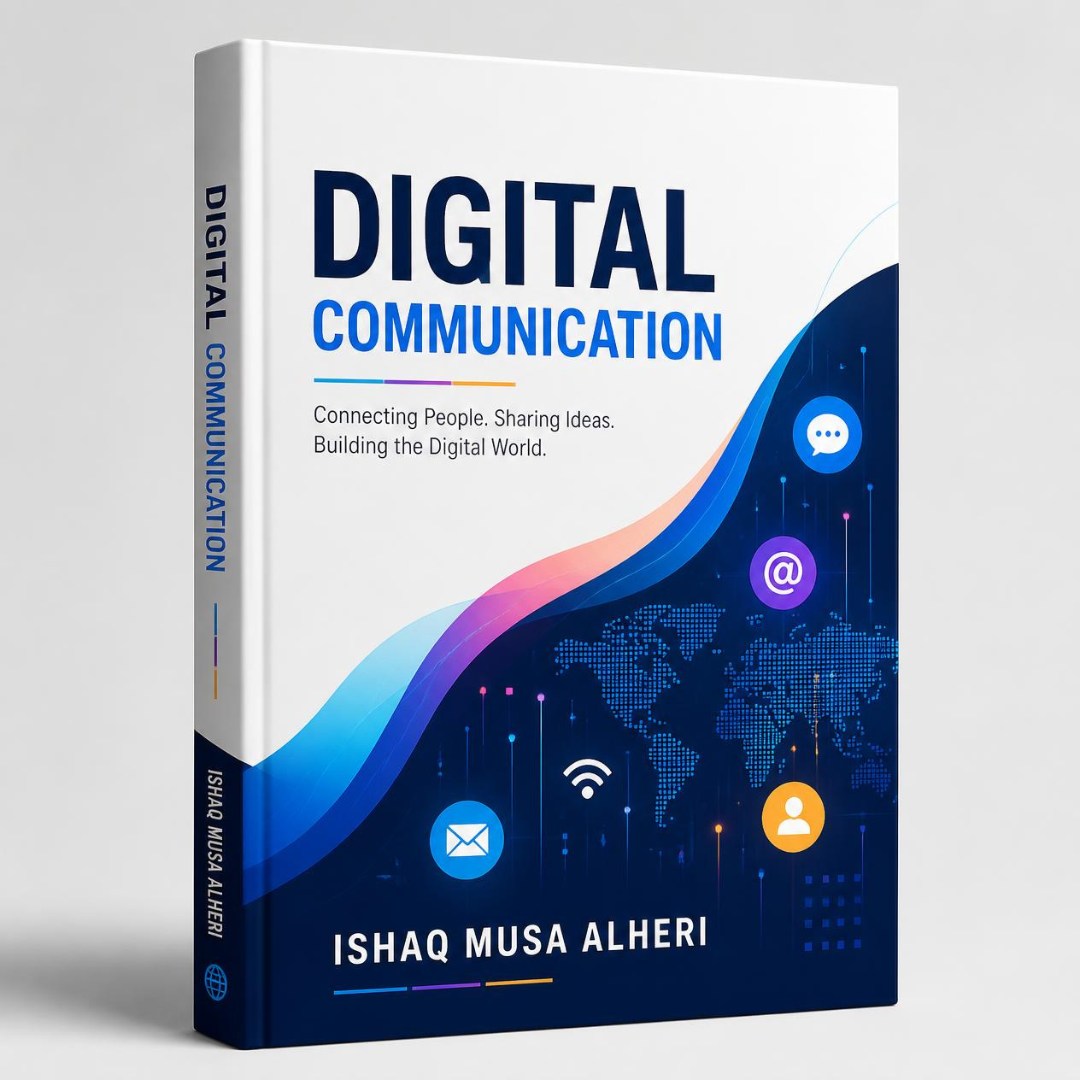
Digital Communication - Ebook

DIGITAL COMMUNICATION FOR HIGHER INSTITUTIONS
A practical academic guide to understanding, using, and managing digital communication across today’s major communication platforms.
Product Overview
Digital communication has moved far beyond simply sending messages online. It now involves choosing the right channel, format and platform, understanding audience behaviour, managing digital content, and recognising how online actions can affect personal and organisational reputation.
Digital Communication for Higher Institutions provides a structured introduction to these essential areas. Designed around six teaching modules, the book takes students from the foundations of digital communication through email and mobile messaging, blogging and podcasting, websites and digital media, social media platforms, and finally digital footprints, online identity and reputation.
The emphasis is not only on definitions. Throughout the book, concepts are connected to practical communication decisions, including selecting an appropriate channel, choosing suitable media formats, managing digital publishing, responding to online audiences, and dealing thoughtfully with issues such as misinformation, privacy, virality and reputation.
What's Inside the Book?
- Foundations of Digital Communication
- Understand the meaning and evolution of digital communication, its basic elements, major characteristics, advantages and limitations, and the distinction between digital communication and digital media.
- Email and Messaging Systems
- Learn the components and purposes of email, how messages are opened, sent and replied to, and how terms such as CC, BCC, CTA, spam and attachments are used. The module also explains the differences between SMS and MMS and when each is appropriate.
- Blogging and Podcasting
- Explore the development and different forms of blogs and podcasts, blog management, podcast formats and production, and the use of content calendars to organise digital publishing.
- Websites and Digital Media
- Examine how websites have developed, their major components and categories, different types of digital media, file formats, and the process of converting physical or digital materials into appropriate formats for online use.
- Social Media Platforms
- Understand the evolution and types of social media, categories of users, account management, platform characteristics, audience participation and the advantages and risks of social media communication.
- Digital Footprints, Identity and Reputation
- Learn how digital traces are created, how online and offline identities differ, how content becomes viral, and how posting, sharing and liking can influence identity and reputation over time.
What Readers Will Learn
By working through the book, readers can:
- Understand the core concepts, evolution and processes of digital communication.
- Distinguish digital communication from digital media.
- Select communication channels, platforms and formats according to audience and purpose.
- Use email and mobile messaging systems appropriately.
- Understand the practical requirements of blogging and podcast production.
- Explain website components, website categories and digital media formats.
- Apply basic principles for managing blogs, podcasts, websites and social media accounts.
- Analyse the advantages, limitations and ethical implications associated with digital platforms.
- Recognise different patterns of social media participation, from creators and critics to spectators and inactive users.
- Evaluate how digital footprints, online identity and virality can influence reputation.
- Apply digital communication principles to practical communication problems and strategic decisions.
Key Features
- Six clearly organised teaching modules
- Learning objectives at the beginning of each module
- Practical communication situations and examples
- Module summaries for reinforcement and revision
- Review questions for testing understanding
- Key terms for quick reference
- Academic references supporting important concepts
- Practical decision-making emphasis, rather than definitions alone
- Coverage of both individual and organisational communication
- Attention to common areas of student confusion and examination application
Who Is This Book For?
The book is primarily suited to students in higher institutions studying Digital Communication and related areas of communication and media.
It can also support:
- Students preparing for examinations in digital communication
- Lecturers using structured material for classroom teaching
- Learners who need a reference guide to major digital communication platforms
- Students developing an academic foundation in email, websites, blogging, podcasting and social media
The book's stated objectives specifically focus on competent use of digital communication tools for professional and organisational communication, analysis of digital platforms, and practical decision-making.
Why This Book Is Useful
Digital communication is easy to use but not always easy to use well. Sending an email, opening a social media account or publishing a website does not automatically mean that communication has been effective.
This book helps readers look beyond the technology and consider the communication decision behind it. For example, it explains why the right channel depends on the audience and purpose, why a message can reach the correct receiver and still fail, and why speed must sometimes be balanced against accuracy and privacy.
That practical emphasis makes the material useful not only for remembering concepts but also for answering application-based questions and thinking more carefully about real communication situations.
Practical Value
The book repeatedly connects theory with situations that require a communication decision.
Students encounter examples involving examination announcements, email recipients, Reply All, SMS and MMS selection, blog management, podcast formats, website organisation, digital file conversion, social media strategy and online reputation.
The review questions further encourage application. They ask learners to analyse communication channels, distinguish media types, recommend appropriate messaging systems, evaluate social media risks and consider reputation-management decisions.
Ideal Uses
Individual Study
Use the modules, summaries, key terms and review questions to build and revise understanding independently.
Classroom Teaching
The organised modules and learning objectives provide a useful structure for lectures and classroom discussion.
Examination Revision
Review questions and key terms provide opportunities to revisit important concepts and practise applying them to communication situations.
Course Support
The book can serve as supplementary reading alongside lectures and other academic materials.
Reference
Use it for quick clarification of concepts relating to digital communication, email, messaging, blogs, podcasts, websites, digital media, social media and digital identity.
Quick Value Summary
With this book, readers can:
- Understand the foundations of digital communication.
- Learn how major digital communication channels and platforms work.
- Differentiate related concepts that are commonly confused.
- Practise applying communication principles to realistic situations.
- Select appropriate channels, formats and platforms.
- Analyse the opportunities and limitations of digital communication.
- Recognise how online actions contribute to digital identity and reputation.
- Review important concepts through summaries, key terms and questions.
Ready to strengthen your understanding of digital communication? Get your copy of Digital Communication for Higher Institutions and build a practical foundation for studying and applying digital communication.